This article contains affiliate links. As an Amazon Associate, we may earn commissions from qualifying purchases.
Choosing a tactical or EDC flashlight requires understanding two essential measurements: lumens and candela. These terms are often confused or used interchangeably, but they describe different aspects of a flashlight’s performance. Knowing the difference helps you pick the right light for home defense, EDC, outdoor use, or professional work.
For specific recommendations, see Best Tactical Flashlights for 2026
What Lumens Measure (Total Light Output)
Lumens represent the total visible light emitted by a flashlight.
Think of lumens as the size of the “light bucket” the flashlight pours out.
- High lumens (1,000+) – Best for outdoor use and lighting large areas
- Mid-range (500–800) – Ideal for EDC and home defense
- Low lumens (100–300) – Good for navigation and administrative tasks
The common misconception is that more lumens always provide better visibility. Indoors, extremely high lumen levels can reflect off bright walls and temporarily impair your vision.
For environment-specific guidance, see How Many Lumens Do You Really Need?
What Candela Measures (Beam Intensity)
Candela describes how tightly a flashlight focuses its light in one direction.
It determines:
- how far the beam reaches
- how strongly the hotspot illuminates a distant object
- how well the light cuts through barriers (fog, tinted glass, smoke)
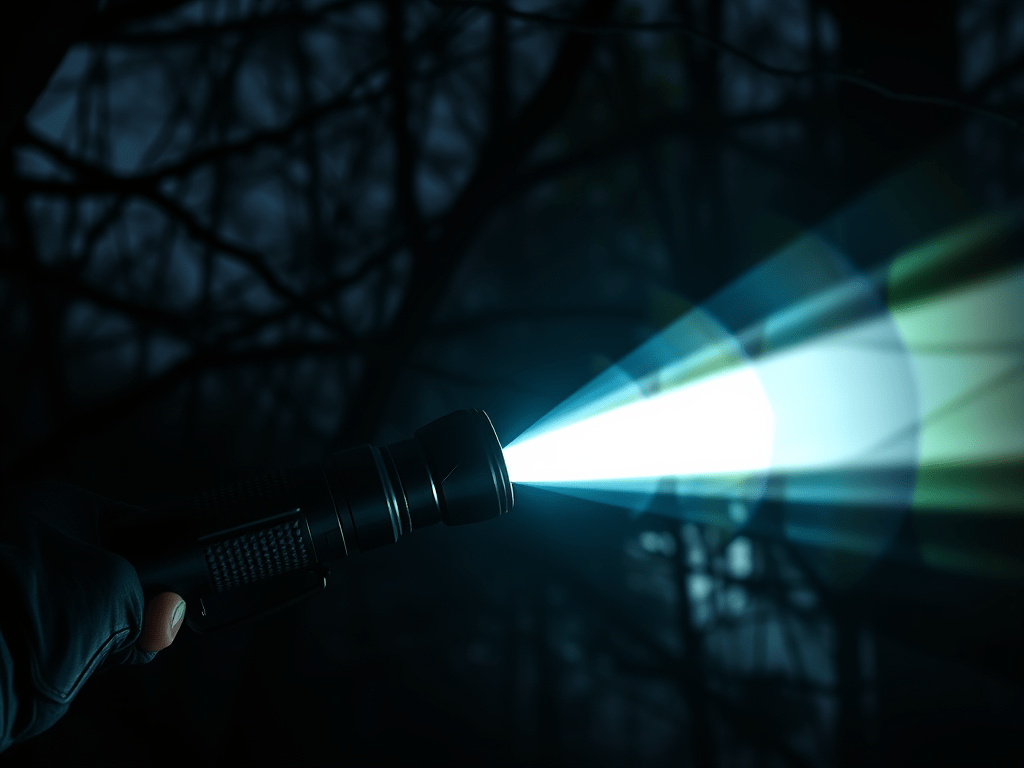
High-candela flashlights create a tight, intense beam (“throwers”).
Lower-candela flashlights create a softer, wider beam (“flooders”).
A 500-lumen flashlight with high candela can outperform a 1,200-lumen flood light when distance or target identification matters.
Lumens vs Candela: Which Matters More?
For Indoors (Home Defense, CQB)
- Lumens must be controlled (500–800) to avoid self-blinding
- Moderate candela helps with hallway identification
- Beam spill matters more than maximum distance
For EDC
- Lumens 300–800
- Balanced candela for mixed tasks
- Manual and environment-driven use
For Outdoor Use (Property, Trails, Search)
- Candela matters more than lumens
- High-candela beams identify objects farther out
- Total output helps with area lighting
For Law Enforcement/Security
- Candela is the primary requirement
- Raw lumens are secondary
- A predictable, high-intensity hotspot improves target identification
How Lumens and Candela Work Together
Lumens determine how much light you have.
Candela determines how effectively that light is used.
High lumens + low candela
- Wide flood beam
- Good for rooms
- Poor for distance
Low lumens + high candela
- Tight, piercing beam
- Excellent for long-range identification
- Not ideal for admin tasks
Balanced lumens + moderate candela
- Best all-around option
- Fits most tactical and EDC use cases
For help identifying beam shapes, see Beam Pattern Types Explained.
Why Lumens Alone Can Mislead Buyers
Many manufacturers advertise “2,000+ lumens” to attract attention, but these figures often represent turbo modes that:
- last less than a minute
- overheat quickly
- step down sharply
- produce misleading real-world expectations
This is why the ANSI FL1 standard matters — it forces companies to use standardized testing for:
- lumens
- beam distance
- runtime
Lights that meet ANSI FL1 standards provide more reliable information.
Summary Table: Lumens vs Candela
| Measurement | Represents | Best For | Limitations |
|---|---|---|---|
| Lumens | Total light output | Room illumination, flood tasks | Misleading if candela is low |
| Candela | Beam intensity | Distance, target ID | Doesn’t represent total brightness |
| Lumens + Candela Balance | Overall performance | Tactical and EDC use | Requires understanding both |
Conclusion
Lumens tell you how much light a flashlight produces.
Candela tells you how effectively that light reaches your target.
For indoor use, prioritize controlled lumens and moderate candela.
For outdoor use, prioritize high candela with sufficient lumens.
For EDC, choose a balanced beam and mid-range output.
For real-world examples, see Best Tactical Flashlights for 2026, Best Home Defense Flashlights for 2026, and Best EDC Flashlights 2026.
 Tactical Gear Source
Leave a comment