
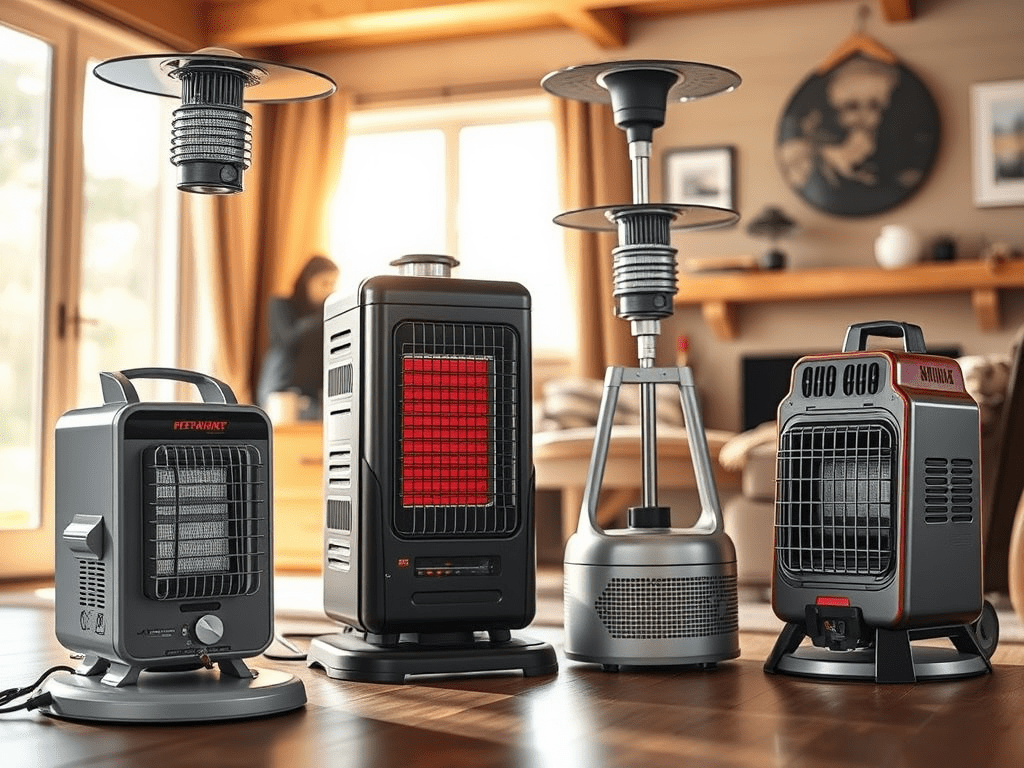
Heat When It Matters Most
When the power goes out and the temperature drops, warmth quickly shifts from comfort to survival. Modern homes depend on the grid for nearly everything, and when that grid fails, a safe, efficient emergency heater becomes essential.
This guide reviews the best emergency heaters for 2025, chosen for safety, reliability, and off-grid practicality. Every model listed here is indoor-rated, field-proven, and available through reputable retailers.
Affiliate Disclosure: Tactical Gear Source may earn commissions from qualifying purchases made through our links. We never accept compensation for biased reviews or product placement.
Top 5 Emergency Heaters for 2025
Mr. Heater Buddy Series — Best Overall Indoor Propane Heater
- Fuel Type: 1 lb or 20 lb propane (tank adapter available)
- BTU Output: 4,000 – 9,000 BTU
- Runtime: ≈ 5.5 hours on low (1 lb cylinder)
- Safety Features: O₂ depletion sensor + tip-over shutoff
- Pros:
- Certified indoor safe (CSA 4.98 standard)
- Compact and rugged for homes, cabins, or RVs
- Excellent track record during winter power outages
- Cons: Requires proper propane storage
- Ideal For: Reliable home or RV heat during blackouts
Dyna-Glo Indoor Safe Propane Heater — Best for Large Rooms
- Fuel Type: Propane (tank sold separately)
- BTU Output: 6,000 – 18,000 BTU
- Runtime: ≈ 64 hours on low (20 lb tank)
- Safety Features: Built-in O₂ sensor + auto shutoff
- Pros:
- Safely heats up to 700 sq ft
- Ceramic radiant elements deliver steady warmth
- Great for basements and work areas
- Cons: Larger and less portable than compact models
- Ideal For: Warming medium-to-large indoor spaces
Coleman SportCat Catalytic Heater — Best for Camping & Tents
- Fuel Type: 1 lb propane cylinder
- BTU Output: 1,500 BTU
- Runtime: ≈ 14 hours per cylinder
- Safety Features: Catalytic (flame-free) element
- Pros:
- Safe for well-ventilated tents and shelters
- Lightweight, quiet, and fuel efficient
- Cons: Low output — personal heat only
- Ideal For: Tent campers and small emergency shelters
Heat Hog 18K BTU Portable Propane Heater — Best Adjustable Design
- Fuel Type: Propane (1 lb or 20 lb tank with adapter)
- BTU Output: 9,000 – 18,000 BTU
- Runtime: ≈ 4.5 hours on high (1 lb tank)
- Safety Features: Tip-over protection + O₂ sensor
- Pros:
- Pivoting radiant head targets heat precisely
- Integrated storage for hose and tools
- Built for cabins and workshops
- Cons: Heavier than Mr. Heater Buddy
- Ideal For: Directional heat in garages or off-grid cabins
EcoFlow Wave 2 Heater / AC Hybrid — Best Off-Grid Electric Option
- Fuel Type: Battery / AC / Solar input
- BTU Output: ≈ 5,100 heating / 5,000 cooling
- Runtime: Up to 8 hours (battery)
- Safety Features: Zero emissions — no combustion
- Pros:
- Dual heating & cooling functions
- 100% indoor safe (no CO risk)
- Integrates with EcoFlow Delta or River power stations
- Cons: Higher initial price
- Ideal For: Apartments and off-grid users with portable power
Comparison Table
| Heater | Fuel Type | BTU Range | Indoor Safe | Runtime | Best For |
|---|---|---|---|---|---|
| Mr. Heater Buddy | Propane | 4K–9K | Yes | 5.5 hr (1 lb) | General blackouts |
| Dyna-Glo Indoor | Propane | 6K–18K | Yes | 64 hr (20 lb) | Large rooms |
| Coleman SportCat | Propane | 1.5K | Ventilate | 14 hr (1 lb) | Camping / tents |
| Heat Hog 18K | Propane | 9K–18K | Yes | 4.5 hr (1 lb) | Cabins / workshops |
| EcoFlow Wave 2 | Electric / Battery | 5K | Yes | 8 hr (battery) | Apartments / off-grid |
Safety & Ventilation Guide
- Use Indoor-Rated Heaters Only. Avoid construction heaters meant for open sites.
- Provide Ventilation. Crack a window to allow fresh air exchange with propane units.
- Install CO Detectors. Battery-powered alarms belong near sleeping areas.
- Store Fuel Safely. Propane cylinders stay upright and outside living areas.
- Never Leave Heaters Unattended. Turn them off before sleep or departure.
Buyer’s Guide: Choosing Your Emergency Heater
- Fuel Choice: Propane = long runtime; battery = zero emissions.
- BTU Rating: ≈ 5,000 BTU per 100 sq ft is a good baseline.
- Portability: Handles and compact hoses make deployment faster.
- Safety Mechanisms: Prioritize O₂ and tip-over sensors.
- Warranty & Parts: Mr. Heater and Dyna-Glo excel in North America support.
FAQ
Q: Are propane heaters safe indoors?
Yes — only when explicitly labeled “indoor safe,” used with ventilation and a CO alarm. Never use construction heaters inside living spaces.
Q: How big a heater do I need?
Multiply room square feet × 50 to estimate BTU requirements (200 sq ft ≈ 10,000 BTU).
Q: Can I power these with solar or generators?
Only electric models like EcoFlow Wave 2 or low-draw blankets can run on solar. Propane units must never tie into electrical systems.
Q: Do propane tanks expire?
Yes. Most are certified for 12 years from manufacture. Inspect and re-certify as needed.
Conclusion: Prepared Heat Is Safe Heat
When temperatures drop and the grid fails, the right heater keeps your family safe and functional. Whether you choose the proven Mr. Heater Buddy, a large-capacity Dyna-Glo, or the zero-emission EcoFlow Wave 2, the goal is simple — stay warm without risk. Pair your heater with a CO detector, spare fuel, and a reliable radio for a complete winter readiness setup.
Related Articles
Tactical Flashlights Explained: Lumens, Candela & Beam Patterns
Best Emergency Radios for Survival and Bug-Out Kits (2025 Guide)
Best Portable Solar Chargers for Bug-Out and Survival Kits (2025 Guide)
 Tactical Gear Source
Leave a comment