
This article contains affiliate links. As an Amazon Associate, we may earn commissions from qualifying purchases.
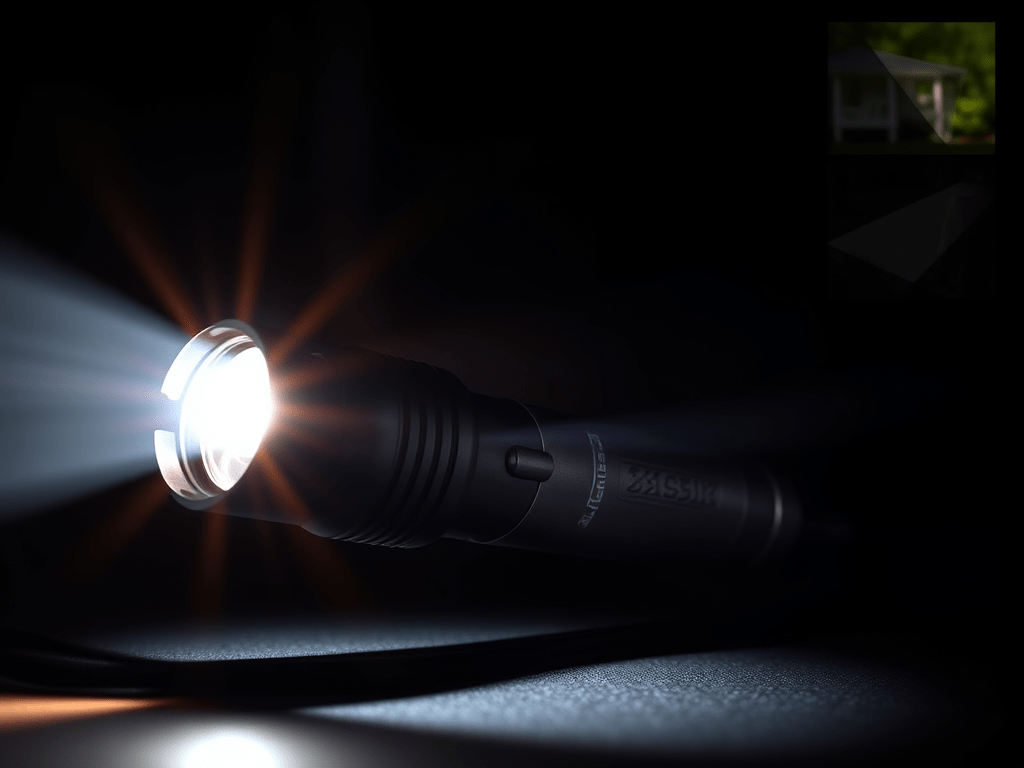
Beam pattern is one of the most important—and most misunderstood—features of a tactical or EDC flashlight. The way a flashlight distributes its light determines how well it performs indoors, outdoors, and in emergency situations.
This guide breaks down the three major beam pattern types, how they work, and how to choose the right one.
For brightness requirements by environment, see How Many Lumens Do You Really Need?
What Is a Beam Pattern?
A beam pattern describes how a flashlight spreads its light.
Three components define it:
- Hotspot – the bright central zone
- Spill – the surrounding, less intense light
- Corona – the transition between hotspot and spill
The relationship between these determines whether a flashlight is:
- a flooder
- a thrower
- or a hybrid
Flood Beams
Flood beams produce wide, evenly distributed light that excels at:
- indoor navigation
- room clearing
- administrative tasks
- repairing equipment
- situational awareness at close range
Strengths:
- Excellent for tight spaces
- Minimal self-blinding when used correctly
- Provides maximum peripheral vision
Limitations:
- Not effective past moderate distances
- Reduced ability to identify distant objects
Throw Beams
Throw beams focus light into a tight hotspot, providing:
- long-distance visibility
- superior target identification
- the ability to cut through fog, rain, smoke, or tinted glass
Strengths:
- Best for outdoor use
- Extremely effective at distance
- High candela aids in threat identification
Limitations:
- Can be uncomfortable indoors
- Narrow spill reduces situational awareness in close quarters
Hybrid Beams
Most modern tactical lights use hybrid beams, blending flood and throw.
They offer:
- a tight enough hotspot for distance
- enough spill for awareness
- comfortable indoor performance
- versatile outdoor use
This is the best all-purpose beam for most users.
Which Beam Pattern Should You Choose?
Home Defense (Indoors)
Choose a flood or hybrid beam.
Avoid extremely tight throw beams that create tunnel vision or excessive glare.
EDC
Choose a hybrid beam.
Daily tasks require balance, not extremes.
Outdoor/Property Use
Choose a throw or hybrid beam.
Distance matters more here, especially for threat or wildlife identification.
Law Enforcement/Security
Prioritize high-candela hybrid beams for reach and identification under stress. Learn more about Lumens vs Candela Here
For real-world examples across each pattern type, see Best Tactical Flashlights for 2026
Color Temperature & CRI (Optional but Valuable)
Color Temperature
- Cool white (6000K+): appears brightest; cuts haze
- Neutral white (4500–5000K): best color accuracy; ideal indoors
- Warm white (3000–4000K): lower glare; better depth perception
CRI — Color Rendering Index
Higher CRI (≥90) improves:
- identification
- coloration accuracy
- depth perception
- contrast in cluttered environments
High CRI is extremely valuable for police, medics, and indoors.
Beam Pattern Misconceptions
Myth: “Throwers are always better outdoors.”
Reality: Only if your task requires distance; many outdoor tasks are better served by hybrids.
Myth: “Flood beams are useless outside.”
Reality: They excel at nighttime campsite, garage, and work tasks.
Myth: “Hybrid beams are compromises.”
Reality: They’re engineered to be the most practical pattern for the majority of users.
Conclusion
Beam pattern determines the function of your flashlight far more than raw brightness numbers. Choosing the right pattern ensures the light matches your environment and mission.
- Use flood beams for tight indoor areas.
- Use throw beams for distance and outdoor identification.
- Use hybrid beams for general-purpose EDC and tactical scenarios.
For recommended models across each category, see Best Tactical Flashlights for 2026, Best Home Defense Flashlights for 2026, and Best EDC Flashlights 2026.
 Tactical Gear Source
Leave a comment