
This article contains affiliate links. As an Amazon Associate, we may earn commissions from qualifying purchases.
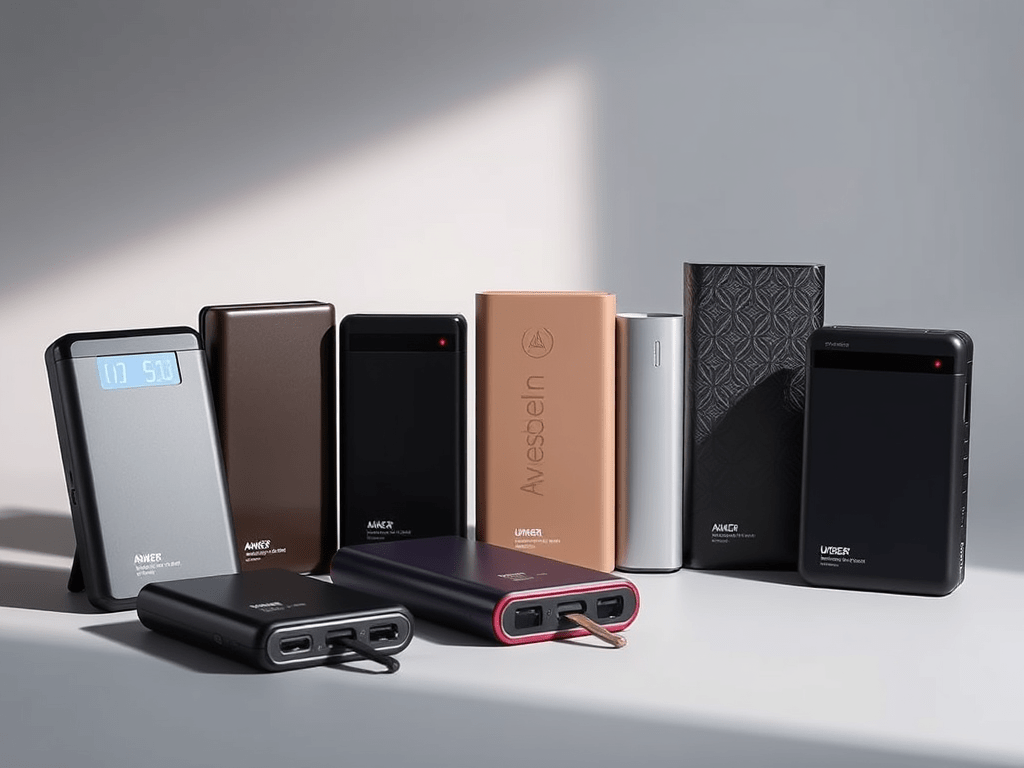
Power banks are often marketed with large numbers and vague claims, but many buyers discover too late that the model they chose cannot reliably power the devices they actually depend on. Capacity ratings can be misleading, output limitations are frequently overlooked, and not all power banks behave well when stored long-term.
This guide explains how power banks work, which specifications matter when choosing one, and how to interpret those specifications realistically. It then identifies a short list of specific, proven power bank models that perform well across different use cases, budgets, and form-factor priorities.
Jump to a Section
- Quick Picks: Best Power Banks at a Glance
- How Power Bank Capacity Really Works (Wh vs mAh)
- USB-C Output and Charging Speed
- Pass-Through Charging and Trickle Modes
- Storage, Shelf Life, and Safety
- Best Power Banks for Preparedness and Power Outages
- How to Choose the Right Size for Your Kit
- Common Mistakes to Avoid
- Frequently Asked Questions
Quick Picks: Best Power Banks at a Glance
- Best Overall High-Performance Power Bank: Anker 737 (PowerCore 24K / 140W)
- Best Value High-Output Alternative: UGREEN Nexode 25000mAh 145W
- Best Budget Power Bank That Makes Sense: INIU 20000mAh 65W USB-C PD
- Best Slim / Flat-Profile Option: Baseus Blade Pro 20K 100W
- Best Practical, Kit-Friendly Pick: BioLite Charge 100 Max
Comparison Table: Top Power Banks
| Model | Capacity | Max Output | Ports | Key Strength | Link |
|---|---|---|---|---|---|
| Anker 737 | ~86–90Wh | 140W | USB-C ×2, USB-A | Flagship performance | Amazon |
| UGREEN Nexode 25K | ~92.5Wh | 145W | USB-C ×2, USB-A | Best value high output | Amazon |
| INIU 20K 65W | ~74Wh | 65W | USB-C, USB-A | Budget, modern device | Amazon |
| Baseus Blade Pro | ~74Wh | 100W | USB-C ×2 | Slim form factor | Amazon |
| BioLite Charge 100 Max | ~94.7Wh | 100W | USB-C, USB-A | Simple, reliable | Amazon |
How Power Bank Capacity Really Works (Wh vs mAh)
Most power banks advertise capacity in milliamp-hours (mAh), but this number alone does not reflect how much usable energy the bank actually provides. What matters more is watt-hours (Wh), which measure total stored energy.
Key points:
- mAh is tied to voltage and can be misleading across products
- Wh allows meaningful comparison between power banks
- Conversion losses mean usable energy is always lower than rated capacity
As a general reference:
- 20,000mAh power banks typically store ~70–75Wh
- ~100Wh is the practical upper limit for compact power banks due to TSA limitations
- Larger numbers do not automatically mean longer runtime for all devices
USB-C Output and Charging Speed
Capacity determines how long a power bank lasts; output wattage determines what it can run.
General guidance:
- 18–20W: Phones, small electronics
- 30–45W: Tablets, radios, faster phone charging
- 65W+: Laptops and multi-device setups
Higher output also affects how quickly the power bank itself can recharge. A large power bank with low input wattage may take most of a day to refill, limiting usefulness when power is intermittent.
Pass-Through Charging and Trickle Modes
Pass-through charging allows a power bank to charge devices while it is being charged. This is useful when pairing a power bank with a wall charger or portable solar panel, but it should be treated as a convenience feature rather than a requirement.
Trickle or low-draw modes help keep power flowing to devices that draw very little current, such as:
- Small radios
- Flashlights
- Wearables
Not all power banks support this reliably, and its absence can cause unexpected shutoffs.
Storage, Shelf Life, and Safety
Lithium-ion power banks are safe when used correctly, but storage habits matter.
Best practices:
- Store partially charged (roughly 50–70%) if unused long-term
- Avoid prolonged exposure to extreme heat or cold
- Recharge periodically to prevent deep discharge
Reputable manufacturers include safeguards such as over-current protection, thermal monitoring, and short-circuit protection. Avoid models with unrealistic capacity claims or unclear specifications.
Best Power Banks for Preparedness and Power Outages
Anker 737 (PowerCore 24K / 140W) — Best Overall High-Performance Power Bank
The Anker 737 is a benchmark model, combining high usable capacity with excellent USB-C Power Delivery output. It supports fast charging for phones, tablets, and laptops while recharging quickly itself.
Category Evaluation
- Performance: Excellent
- Durability: Strong
- Reliability: Proven
- Practicality: Handles high-draw devices
- Value: Premium but justified
- Ease of Use: Clear display and controls
- Support & Warranty: Excellent
UGREEN Nexode 25000mAh 145W — Best Value High-Output Alternative
The UGREEN Nexode 145W offers near-flagship output and capacity at a lower price point than comparable premium models. It is well-suited for users who want high output without paying top-tier pricing.
Category Evaluation
- Performance: Very strong
- Durability: Good
- Reliability: Consistent
- Practicality: Multi-device capable
- Value: High
- Ease of Use: Straightforward
- Support & Warranty: Adequate
INIU 20000mAh 65W USB-C PD — Best Budget Power Bank That Makes Sense
INIU’s 65W model represents a sensible entry point into modern USB-C PD power banks. It balances honest capacity, useful output, and affordability without relying on exaggerated marketing claims.
Category Evaluation
- Performance: Good for size
- Durability: Acceptable
- Reliability: Solid for budget tier
- Practicality: Easy to integrate
- Value: Strong
- Ease of Use: Simple
- Support & Warranty: Acceptable
Baseus Blade Pro 20K 100W — Best Slim / Flat-Profile Power Bank
The Baseus Blade Pro prioritizes form factor. Its flat profile makes it easier to pack into bags and organizers while still offering enough output for demanding devices.
Category Evaluation
- Performance: Strong for its shape
- Durability: Good
- Reliability: Generally consistent
- Practicality: Excellent packability
- Value: Competitive
- Ease of Use: Simple
- Support & Warranty: Average
BioLite Charge 100 Max — Best Practical, Kit-Friendly Power Bank
The BioLite Charge 100 Max focuses on predictable behavior and ease of use rather than advanced features. It is a strong choice for users who value reliability and straightforward operation.
Category Evaluation
- Performance: Stable and sufficient
- Durability: Solid
- Reliability: High
- Practicality: Excellent for kits and vehicles
- Value: Fair
- Ease of Use: Very intuitive
- Support & Warranty: Good
How to Choose the Right Size for Your Kit
- Home or blackout kit: 20,000–27,000mAh, 45W+ output
- Vehicle or work bag: 10,000–20,000mAh, compact design
- Multi-device use: 65–100W output with higher capacity
Many users find that two medium-capacity power banks offer more flexibility than a single large unit.
Common Mistakes to Avoid
- Choosing based on mAh alone
- Expecting small solar panels to recharge large banks quickly
- Storing power banks fully depleted
- Assuming low-output models can run high-draw devices
Frequently Asked Questions
How many times will a 20,000mAh power bank charge a phone?
Typically 3–5 full charges, depending on efficiency and device size.
Is pass-through charging required?
No, but it can improve flexibility in some setups.
Are larger power banks always better?
Not necessarily. Output, recharge speed, and form factor matter.
How long do power banks last?
Quality models can last many years with proper care.
Final Thoughts
Choosing the right power bank is less about chasing the biggest numbers and more about understanding how capacity, output, and reliability interact. The models listed above represent dependable options across different priorities and budgets, selected to perform as expected rather than impress on paper.
 Tactical Gear Source
Leave a comment